


Новости отрасли
Insights, company updates and project highlights from HY Automation — dispensing & potting, optical inspection and turnkey production lines.
Company News | Technology Articles | Industry Updates | Case Highlights
HY’s Korean R&D Center Deepens Overseas Battery Line Partnerships
Recently, HY’s Korean R&D subsidiary upgraded its new-generation pouch-cell battery assembly line and deepened long-term cooperation with overseas battery manufacturers, customizing high-precision automation equipment for their overseas capacity-expansion plans.
HY’s Korean R&D subsidiary has upgraded its new-generation pouch-cell battery assembly line and deepened long-term cooperation with overseas battery manufacturers. The cooperation covers customized high-precision automation equipment supporting the partners’ overseas capacity-expansion plans. The subsidiary integrates senior R&D resources for line development and continuous optimization.

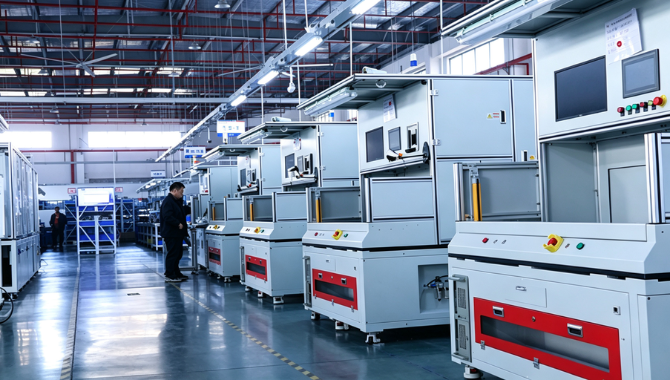
HY Wins Specialized Sophisticated Enterprise Certificate
HY has been recognized as a Specialized and Sophisticated Enterprise, a national-level certification for SMEs with strong specialization, refinement, distinctive capabilities and innovation strength. At the Global Intelligent Manufacturing Expo, HY displayed its core automation equipment for lithium batteries, auto parts and 3C electronics, presenting full Industry 4.0 digital turnkey solutions covering line design, digital commissioning and lifecycle service, which drew buyers and technical experts from around the world.
HY Upgrades New Industry 4.0 Line Solutions
HY has upgraded its full Industry 4.0 intelligent manufacturing solutions, optimizing four core modules: digital twin, real-time data collection, intelligent scheduling and quality traceability. The upgraded solutions are built for the digital transformation of lithium battery, automotive and 3C factories — moving beyond standalone equipment toward lines where process data is collected in real time, schedules adjust intelligently and every unit’s quality record is traceable.
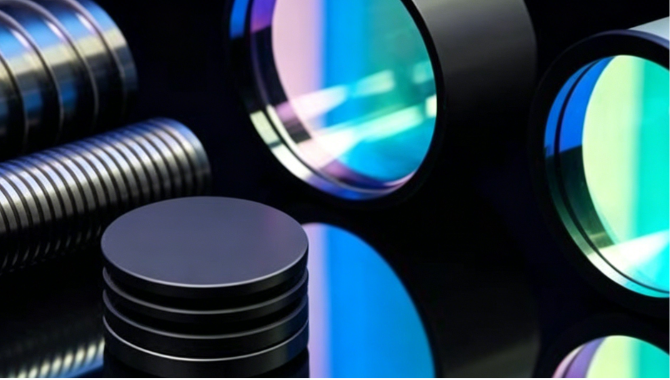

Vacuum Potting vs. Atmospheric Potting: When Vacuum Becomes Mandatory
Keywords: vacuum potting machine, vacuum dispensing machine, bubble-free potting, two-component vacuum potting, potting voids
Vacuum potting vs. atmospheric potting: when vacuum becomes mandatory for bubble-free encapsulation of power electronics and automotive modules.
Air is the enemy of potted electronics. A single trapped bubble inside an encapsulated power module can become the starting point of partial discharge, a thermal hot spot, or a path for moisture ingress. In high-voltage and automotive applications, that one bubble can decide whether a unit survives its rated lifetime — which is why the choice between vacuum and atmospheric potting is a reliability decision, not just a cost decision.
Vacuum potting places the part — or the entire mold — inside a chamber held at deep vacuum, typically around −98 kPa, while the mixed resin is introduced. Under vacuum, dissolved air and volatiles expand and escape before the resin gels, and the resin is literally pulled into gaps, undercuts and fine-pitch structures that atmospheric pressure alone cannot fill. The result is void rates an order of magnitude lower than open-air potting, routinely below 0.5% in well-controlled processes.
Atmospheric potting is not obsolete. For low-voltage consumer products, LED drivers and non-critical housings, dispensing in open air is faster, cheaper and simpler to maintain. If the device never sees high voltage, wide temperature swings or condensing humidity, the residual micro-voids of atmospheric potting rarely cause field failures — and the equipment investment is a fraction of a vacuum line.
The practical comparison comes down to four factors. First, voltage class: anything above a few hundred volts, or with tight creepage distances, favors vacuum. Second, operating temperature: thermal cycling pumps trapped air in and out of voids, accelerating delamination. Third, required lifetime: automotive and industrial products measured in decades justify the vacuum investment. Fourth, resin viscosity: high-viscosity, highly filled compounds trap more air and benefit most from vacuum assistance.
Three process notes decide success or failure regardless of the route chosen. Degas the resin components before they ever reach the mix head — vacuum at the mold cannot fix air whipped in upstream. Balance vacuum level against foaming: pulling too hard on a low-viscosity system boils volatiles and creates foam instead of removing it. And respect the cure profile: a resin that gels before voids have migrated will lock defects in place, vacuum or not.
Vacuum potting is delivered in two equipment forms. Chamber systems place filled parts into a vacuum oven for degassing after dispensing — simple and flexible for mixed products. Inline vacuum dispensing meters, mixes and dispenses directly inside the vacuum chamber, giving the lowest void rates for high-volume automotive and power electronics. The choice depends on takt and mix: chambers suit low-volume, high-mix work; inline systems suit dedicated high-volume lines. Either way, the vacuum pump, chamber seals and resin feedthroughs need regular maintenance — a slow leak that drops vacuum by 10 kPa can double the void rate without triggering any alarm.
Choose vacuum when failure is expensive; choose atmospheric when it is not. The equipment should follow the reliability target — never the other way around.
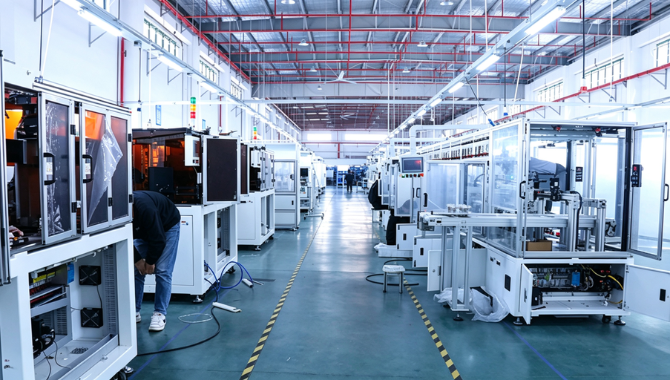

Two-Component Mixing Ratio Accuracy: Why ±2% Decides Cure and Yield
Keywords: two component dispensing, mixing ratio accuracy, 2K dispensing machine, metering pump dispensing, adhesive mixing ratio
Mixing ratio accuracy in two-component dispensing: why holding ±2% decides cure quality, bond strength and first-pass yield on the line.
In two-component dispensing, the mixing ratio is not a pump specification — it is what actually comes out of the mix head, shot after shot, at production speed. A system rated ±1% on the bench can drift to ±5% on the line once viscosity shifts with temperature, hoses flex, or a check valve starts to leak. That drift is where yield goes to die.
The chemistry is unforgiving. Run lean on hardener and the adhesive under-cures: soft, tacky, with a fraction of its rated shear strength. Run rich and the opposite happens — accelerated exotherm, brittleness, and in thick sections, cracked bonds from internal stress. Both failure modes share an ugly trait: they often pass a quick visual check and only reveal themselves in reliability testing or, worse, in the field.
Holding the ratio starts with positive-displacement metering — gear or piston pumps that deliver fixed volumes per revolution regardless of downstream pressure. But pumps alone are not enough for ±2% class work. Flow sensors on each component feed a closed loop that trims pump speed in real time, compensating for viscosity drift as material warms up through a shift. The correction must happen continuously, not once per batch, because ratio errors compound across every shot.
Mixing technology interacts with ratio stability. Static mixers are simple and cheap but add pressure drop that varies with viscosity; a partially clogged element changes the back-pressure balance between the A and B sides and quietly shifts the ratio. Dynamic (rotary) mixers handle high-viscosity and highly filled materials better and are less sensitive to pressure imbalance, at the cost of cleaning and maintenance.
Verification belongs in the production routine, not just in commissioning. Weigh metered shots of each component separately on a fixed schedule. Inspect check valves for weeping — a valve that passes a few drops of B into the A side between shots corrupts the first grams of every dispense. And recalibrate after any material lot change: a new drum of resin is never exactly the same viscosity as the last one.
Temperature deserves special attention because it moves both sides of the ratio independently. Resin and hardener rarely share the same viscosity-temperature curve, so a 10°C swing through the day shifts the A:B flow balance even with positive-displacement pumps. Conditioning the material — holding drums and hoses at a stable temperature — is the cheapest ratio insurance available. A practical maintenance rhythm keeps the system honest: check valves and seals weekly, weigh shots daily at start-up and after breaks, and trend the numbers. A slow drift in shot weight is an early warning of pump wear or a weeping valve, caught weeks before it becomes a yield event.
Ratio accuracy is a system property — pumps, sensors, mixers, valves and discipline together. Treat it that way and ±2% is routine; treat it as a pump datasheet number and the line will remind you otherwise.
7 Common Dispensing Defects and How to Eliminate Them
Keywords: dispensing defects, glue dispensing problems, dispensing troubleshooting, adhesive dispensing quality, dispensing voids
Bubbles, stringing, voids, inconsistent beads: seven common dispensing defects, their root causes and proven countermeasures for each.
Most dispensing defects look mysterious on the line and obvious in hindsight. Seven patterns cover the large majority of cases — each with a short list of root causes and countermeasures that actually work.
1. Bubbles and voids. Air gets in three ways: whipped in during mixing, carried in on damp substrates, or trapped under components as resin flows. Countermeasures: degas resin before dispensing, pre-bake moisture-sensitive parts, and for critical assemblies, dispense under vacuum or use a vacuum-assist chamber. If voids cluster in one corner of every part, suspect flow-front trapping and adjust the dispense path so air has an escape route.
2. Stringing and tailing. A thread of adhesive follows the nozzle up at the end of each shot. High viscosity, wrong nozzle geometry and missing suck-back are the usual suspects. Fix it with a suck-back (reverse) function on the valve, a tapered nozzle matched to the fluid, and tuned break-off parameters — a short, fast retract beats a slow one.
3. Inconsistent shot volume. When bead weight drifts through a shift, look first at air pressure stability on pneumatic systems, then at pump wear on volumetric systems. A regulator with a gauge is not control; closed-loop pressure control plus scheduled shot-weight checks is. Recalibrate after material lot changes.
4. Overflow and short shots. Too much or too little adhesive at the joint is usually a programming problem, not a fluid problem: wrong path offset, drifting Z height as fixtures wear, or parts that vary. Vision-guided positioning and height sensing pay for themselves quickly on high-mix lines.
5. Nozzle curing and clogging. Two-component materials have a pot life, and the mixer does not care that the line stopped for lunch. Purge the mixer on every unplanned stop, size the static mixer to the shot volume, and treat “we’ll clean it later” as the most expensive sentence in dispensing.
6. Craters and fish-eyes. Circular depressions in the cured bead point to surface contamination — silicone oil from nearby processes is the classic culprit. Plasma treatment or primer helps, but the durable fix is contamination control: segregate silicone processes and audit what touches the parts upstream.
7. Weak adhesion and delamination. The bead looks perfect and peels off by hand. Causes: low surface energy on plastics, wrong cure schedule, or contamination. Verify with a simple peel or shear test during process development, lock the cure profile, and re-validate whenever the substrate supplier changes anything — including things they consider minor.
Two habits prevent most of these defects from recurring. First, separate development from production: qualify the dispense program on scrap parts across the full temperature and humidity range the plant actually sees, not just in an air-conditioned lab. Summer humidity has ended more potting processes than any equipment fault. Second, treat the first article of every shift as a process check, not a formality — weigh it, inspect the bead, and compare against the log. Lines that do this catch drift the same day it starts; lines that don’t discover it in the customer’s incoming inspection.
Document which defect you see, fix the cause rather than the symptom, and keep a log. Dispensing problems repeat; a log turns the second occurrence into a ten-minute fix.


Imaging Colorimeters for Automotive Lamp Inspection: What They Catch
Keywords: imaging colorimeter, automotive lamp inspection, optical inspection instrument, chromaticity inspection, car lamp testing
Imaging colorimeters for automotive lamp inspection: spatially-resolved luminance and chromaticity measurement that catches what human eyes miss.
Modern automotive lamps are optical instruments, not light bulbs. An ambient-light strip or a projector lens mixes red, green and blue sources into millions of perceived colors, and the customer — plus the regulator — expects every unit to match. Human inspectors cannot do this job consistently: eyes adapt, fatigue sets in, and nobody’s vision is a calibrated instrument.
An imaging colorimeter is. It captures the entire luminous surface in one exposure and reports luminance and chromaticity for every pixel — a complete brightness and color map of the lamp as it actually appears. Instead of a single “it looks okay,” you get numbers: uniformity gradients, color coordinates at defined measurement spots, and pass/fail against tolerances.
The defects it catches are the ones that escape spot meters and eyeballs. Color shift between production batches shows up as a drift in chromaticity coordinates long before anyone sees it. Dead or dim zones in an LED array appear as luminance dips in the map. Poor mixing in RGB systems reveals itself as color fringing at edges. Wrong correlated color temperature — a batch of LEDs from the wrong bin — fails instantly against the coordinate window.
Putting the instrument on an EOL line takes more than mounting a camera. The measurement needs a dark enclosure; stray factory light is measurement noise. The lamp under test is driven through its real vehicle interface — typically CAN or LIN — so the test exercises the actual dimming and color-mixing commands the car will send. The sequence runs automatically: power on, set color points, capture, evaluate, log. Takt time is set by exposure plus handling, so fast capture and parallel load/unload keep the line moving.
Two practical notes decide long-term success. Calibrate on schedule against a traceable standard; an uncalibrated colorimeter is an expensive opinion. And control ambient light ruthlessly — even a status LED inside the enclosure can corrupt a measurement at the tolerance levels automotive lighting demands.
Multi-color sequencing adds another layer the instrument handles naturally. An RGB ambient-light unit may need to hit a dozen color points — warm white, ice blue, red warning — each with its own chromaticity window. The EOL sequence steps through them automatically, capturing a measurement at each point in seconds. Because every capture is a full-field image, one measurement position often covers the entire lamp, replacing a rack of individual spot sensors. The resulting dataset — luminance and color at every commanded state for every serial number — doubles as design feedback: systematic drift across a production week points back to LED binning or driver current, not to the test station.
Done right, imaging colorimetry turns lamp inspection from subjective sampling into 100% data-driven verification. Every shipped lamp carries a measurement record, not just an inspector’s initials.
Designing a Full-Function EOL Test Line for Automotive Electronics
Keywords: EOL testing, end of line test, automotive electronics testing, functional test line, EOL test equipment
Full-function EOL testing for automotive electronics: electrical, communication, optical and mechanical tests sequenced for takt and traceability.
“End of line” testing for automotive electronics has quietly grown from a final power-on check into a full validation gauntlet. A modern EOL line proves that every unit leaving the factory works electrically, communicates correctly, looks right and is assembled properly — and it does so inside the takt time of a moving production line.
Full-function means four domains. Electrical: insulation, continuity, current draw and protection behavior. Communication: the unit must speak the vehicle’s language — CAN or LIN frames sent and received correctly, firmware version verified. Optical: for anything with a lamp, display or indicator, brightness and color measured against tolerances. Mechanical: torque on fasteners, noise signatures on moving parts, correct assembly verified by sensors rather than eyes.
Station sequencing follows a simple principle: cheap, fast tests first; expensive, slow tests last. Power-on and electrical safety come first — no point optically inspecting a dead unit. Firmware flash and communication checks follow. Functional tests exercise the unit’s real operating modes. Optical and mechanical measurements, which need settled conditions and dark or quiet environments, sit toward the end. A failed unit exits early, keeping expensive test time for good parts.
Takt time is the hard constraint. When a single test takes longer than the line takt, parallelize: duplicate the slow station and route units alternately. Buffer conveyors absorb the statistical variation so one slow unit never stops the line. Design the parallelism in from the start — bolting it on later is where EOL projects go over budget.
Data is the other half of the deliverable. Every unit leaves with a test record: serial number, station results, measured values, timestamps. That record feeds the plant MES and, when a field issue appears two years later, it is the difference between a targeted containment and a blind recall.
Fixtures deserve the same engineering attention as the test instruments. Quick-change tooling lets one line run multiple vehicle models; pogo-pin blocks and connectors must survive hundreds of thousands of cycles without drifting out of tolerance. A fixture that wears out quietly produces the worst kind of failure: tests that pass bad units.
Two supporting systems are easy to overlook. Electrical safety and ESD protection must be designed into the line, not added later: grounded fixtures, ionizers at handling points and verified discharge paths protect both operators and sensitive electronics. And every EOL line needs a defined rework loop — a separate offline station where failed units are diagnosed and repaired, then re-enter the line for a full retest. Units that fail twice go to engineering analysis, not back to the customer. Without that loop, failed units pile up at the end of the line and the whole cell grinds to a halt.
An EOL line is the factory’s last word on quality. Build it to test what matters, sequence it for flow, record everything — and never let it become a rubber stamp.
3C Manufacturing in 2026: Precision Assembly Raises the Equipment Bar
3C products keep getting thinner, denser and harder to assemble — and the equipment bar rises with them. Foldable displays, TWS earbuds and wearables pack more function into less volume, which pushes dispensing tolerances tighter, inspection resolution higher and assembly automation deeper into processes that used to be manual.
Three shifts define the current wave. First, precision fluid control is moving from “nice to have” to baseline: underfill, gasketing and potting in compact devices demand repeatable micro-deposits with in-line verification, because rework on a sealed device is effectively scrap. Second, optical inspection is shifting from sampling to full coverage — imaging-based chromaticity and defect detection now runs inline at production takt rather than in a lab. Third, flexibility matters as much as speed: product lifecycles are short, so lines must change over between models in hours, not weeks, using modular fixtures and recipe-driven programming.
For equipment buyers, the implication is straightforward: evaluate suppliers on changeover time and process data, not just headline cycle time. A line that runs 10% slower but switches models in an hour will beat a “faster” line across a year of mixed production. And traceability is becoming a qualifier — brands increasingly require per-unit process records from their contract manufacturers, which only connected, data-generating equipment can provide.
The supplier landscape is consolidating around turnkey capability. Buyers increasingly prefer one partner responsible for the whole line — dispensing, assembly, inspection and data — rather than integrating separate machines themselves. That puts a premium on engineering depth: application labs where processes are proven on customer parts before purchase, and commissioning teams that stay until the line hits its rated yield. For 3C brands running seasonal volume peaks, local service response time has become a deciding factor in supplier selection.
From Manual Stations to Turnkey Lines: The Automation Upgrade Wave
Across lithium battery, automotive and 3C plants, the same upgrade pattern repeats: manual stations become semi-automatic cells, cells get linked by conveyors and robots, and eventually the whole flow becomes a turnkey line with centralized control. Labor cost is only part of the driver — consistency, traceability and the ability to run multiple product variants are doing most of the pushing.
The upgrades follow a practical sequence. Dispensing and potting go first, because manual glue application is the largest source of variation in most plants. Assembly and fastening follow, with servo-controlled processes replacing pneumatic tools so every joint has a force or torque record. Inspection moves inline — optical and functional checks that used to happen offline get built into the line. Finally, data collection ties it together: line controllers feed production and quality data to plant systems, enabling the traceability that automotive and battery customers now require.
Two cautions for buyers planning such upgrades. First, automate the process before automating the handling — a robot moving parts between bad manual stations just makes bad parts faster. Second, keep the line modular: today’s single-model line is tomorrow’s mixed-model bottleneck. Quick-change fixtures and recipe management cost little at purchase and save enormously over the line’s life.
Data connectivity is the thread running through all four stages. Modern line controllers expose process data through standard industrial protocols, feeding plant-level systems without custom integration projects. This matters because traceability requirements keep tightening: automotive and battery customers now routinely require per-unit process records as a condition of supply. A line that generates data as a byproduct of running is future-proof; one that needs retrofitted sensors and gateways for every new requirement is not. When evaluating upgrade proposals, ask what data the line produces natively — the answer reveals how modern the platform really is.
IATF 16949 and the Quality Bar for Automotive Production Equipment
IATF 16949 is the automotive industry’s quality management standard, and while it certifies manufacturers rather than equipment, its requirements flow directly into what production lines must do. Any supplier feeding the automotive chain — and any equipment builder serving those suppliers — works under its shadow.
Three clauses matter most for line design. Control of production processes demands that special characteristics be identified and monitored: for an assembly line, that means torque, press force, dispense volume and test results are not just checked but statistically controlled. Measurement traceability requires that inspection equipment — from torque transducers to imaging colorimeters — be calibrated on schedule against traceable standards. And containment plus traceability mean that when a defect escapes, the plant can identify every affected unit by serial number and production data, not by date code guesswork.
For equipment selection, the practical translation is: demand per-unit data records, demand calibrated measurement, and demand fixture designs that hold tolerance over hundreds of thousands of cycles. A line that cannot produce evidence of its own process control will struggle to qualify with automotive customers — regardless of how fast it runs. ISO 9001 remains the baseline; IATF 16949 is the bar that decides who supplies the automotive chain.
Suppliers can prepare for these expectations before the audit ever happens. Document the process: control plans that list special characteristics, reaction plans for out-of-tolerance results, and calibration records for every measurement device on the line. Run the data: statistical process control on key parameters, not just pass/fail counts. And design for containment: serialized units with linked process records turn a suspect-batch investigation into a database query instead of a warehouse search. Equipment that bakes these capabilities in — rather than bolting them on — shortens the qualification path with automotive customers considerably.
New Processes to Watch: Solid-State Battery Lines and Mini-LED Inspection
Two emerging processes are starting to pull equipment demand in new directions: solid-state battery assembly and Mini-LED inspection. Both are early — timelines are measured in years, not quarters — but the equipment implications are already visible.
Solid-state batteries change the assembly problem. Without liquid electrolyte filling, the critical steps shift to dry-room electrode stacking, isostatic pressing and hermetic sealing — processes borrowed more from semiconductor and precision pressing than from conventional battery lines. Equipment builders are watching pilot lines closely: whoever masters uniform pressure distribution across large-format cells and contamination-free dry handling will own the first production orders when volumes arrive.
Mini-LED pushes inspection the other way — toward extreme resolution. Tens of thousands of microscopic LEDs per display must each light correctly and uniformly, which strains both test speed and optical measurement. Imaging-based inspection with high-resolution sensors is the leading approach, combined with automated repair stations for defective zones. The pattern mirrors what happened in automotive lamp inspection a decade ago: human sampling gives way to 100% automated optical verification as volumes scale.
Neither process is mainstream yet. But both reward the same equipment traits that matter today: precision motion, in-line measurement, and data for every unit. Lines built with those traits adapt; lines built without them get replaced.
What should equipment buyers do with processes this early? Choose platform flexibility over process specificity: motion systems, dispensing platforms and inspection instruments that can be reconfigured will serve both today’s products and tomorrow’s pilot lines. And stay close to process development — pilot-line partnerships are where the real learning happens, long before volume orders exist. Watching is not a strategy; qualified experimentation is.
Global Lithium Equipment Overseas Orders Surge
In 2026, the global power and energy storage battery industry keeps expanding, with overseas procurement scale of lithium production equipment surging year-on-year. Southeast Asia, Europe and India are three core growth markets. Industrial data shows that overseas orders for domestic automated equipment manufacturers for power and storage battery lines rose over 220% year-on-year in the first half, with overseas revenue accounting climbing steadily. Foreign battery manufacturers speed up local factory construction, bringing full demand for automatic equipment covering cell assembly, filling, sealing and EOL testing. Vacuum glue filling, pole piece vision inspection and module stacking turnkey lines are in short supply. Global buyers prefer integrated Industry 4.0 full-line solutions compliant with local electrical standards and multilingual operation systems. Chinese automated equipment gains global market share with balanced cost and technology, while local after-sales service networks become core competitive advantage.
Global Auto Makers Upgrade Flexible Smart Lines
As global new energy vehicle penetration rises, overseas OEMs and Tier 1 auto suppliers launch large-scale intelligent production line upgrades, pushing booming demand for flexible automatic assembly, laser welding and full-function EOL testing equipment. Dedicated single-model lines are phased out, while mixed-model flexible production becomes mainstream, driving strong demand for quickly switchable digital turnkey lines. Vacuum glue filling packaging and optical appearance inspection equipment see growing orders for auto sensors, ambient lamps, air grilles and actuators. Overseas factories adopt Lighthouse Factory standards, requiring digital twin and AI vision defect identification for full-process data traceability. Domestic automation suppliers deliver custom lines meeting European, American and Southeast Asian automotive standards with mature auto part process databases, securing long-term growth in global auto equipment market.
Precision Vacuum Filling Lines Become Mandatory
Capacity expansion of global new energy vehicles, energy storage and 5G electronics drives rising demand for two-component vacuum automatic filling equipment, with annual compound growth rate over 12% from 2025 to 2026. Core components including auto capacitors, motors, sensors and energy storage transformers require strict insulation, moisture-proof and bubble-free packaging, phasing out simple atmospheric filling machines for high-precision automatic vacuum lines. Global buyers prioritize glue mixing accuracy, stable vacuum performance and production data traceability, favoring modular filling lines compatible with epoxy, polyurethane and silicone. Electronic component factories in Southeast Asia and Europe replace outdated packaging equipment and purchase integrated filling, loading and testing lines for new plants, creating a steady growth cycle for fluid control automation equipment.
High-end Fluid Control Equipment Upgrades Rapidly
Upgraded manufacturing standards for global high-end electronics and new energy components drive high-precision, intelligent and modular iteration of two-component vacuum filling and automatic dispensing equipment. Downstream buyers set strict limits on mixing ratio error, vacuum defoaming performance and process data storage, phasing out simple low-end filling machines. New-generation filling lines adopt servo metering and real-time temperature-pressure compensation modules to connect upstream assembly and downstream inspection into integrated packaging workflows. Overseas auto electronic and energy storage component manufacturers prefer intelligent filling equipment supporting 72-hour stable continuous operation and remote monitoring. Integration of fluid control, machine vision and automatic logistics becomes mainstream R&D direction, strengthening global competitiveness of suppliers mastering both precision fluid technology and full-line integration.
Global Energy Storage Equipment Market Expands
Global energy transition accelerates the construction of independent and commercial energy storage projects, starting a new growth cycle for storage battery automatic production lines. Industrial institutions forecast global new energy storage installation capacity to rise 62% year-on-year in 2026, lifting demand for full-chain equipment including cell packaging, module assembly, vacuum filling and online inspection. Storage factories set stricter standards for line stability, energy consumption and safety compliance than consumer lithium batteries, prioritizing equipment compatible with large-size cells and low energy use. Most overseas storage projects locate in Europe, Southeast Asia and North America, with lead time, local after-sales and remote diagnosis as core purchasing factors. Automation suppliers with dual technical reserves for power and storage batteries can undertake diversified global orders and capture sustained industry growth dividends.
Low-carbon Smart Lines Match Global Carbon Goals
Global carbon neutrality policies push overseas factories to upgrade energy-saving production lines, generating fast-growing demand for low-energy, lightweight and recyclable automation equipment. New-generation lines for lithium batteries, auto parts and electronic packaging optimize servo and pneumatic modules to cut power consumption, equipped with waste gas and dust recovery devices to meet European and American environmental regulations. Vacuum filling machines adopt energy-saving vacuum systems and circulating cooling structures, while optical inspection equipment reduces light source power consumption, with real-time energy monitoring modules for factory carbon management. Overseas buyers include energy consumption and eco-material standards in bidding evaluation, giving suppliers of low-carbon intelligent turnkey lines priority in high-end European and North American manufacturing projects, making carbon reduction a new core competition track for automation equipment industry.
Automotive Ambient Light PCBA Calibration Line
For automotive interior lighting, HY delivered an ambient-light PCBA calibration production line that handles the full process from board handling to optical calibration. Each station integrates servo press-fitting and RGB chromaticity optical inspection, so color consistency is verified inline rather than by sampling. Modular quick-change fixtures allow mixed production of multiple vehicle models on the same line, and all process data is synchronized for traceability. The line runs as a complete turnkey cell: scheme design, layout planning, installation and commissioning were all provided by HY’s engineering team.
Door Logo Projector Lamp EOL Test Equipment
Door logo projector lamps need every unit verified before it leaves the factory. HY’s EOL test equipment for this application combines electrical testing, communication testing and optical inspection in one station: projected image quality, brightness and color are checked automatically, and CAN/LIN bus programming confirms each lamp talks correctly to the vehicle network. Multi-functional EOL testing covers torque, noise and electric current where mechanical assembly is involved. Units pass or fail on data — no manual judgment calls — which keeps defective lamps from reaching the assembly plant.
HVAC Air Vent Actuator Full-Process Assembly Line
Air vent actuators combine precision mechanics with electronic control, and HY’s full-process assembly line builds them start to finish. The line integrates servo press-fitting for consistent assembly force, automatic gear oiling for smooth long-term operation, and multi-functional EOL testing for torque, noise and electric current. Because actuator variants change frequently across vehicle models, the line uses modular quick-change fixtures to switch over fast and support mixed-model production. Every unit’s test data is recorded and traceable.
Grille Lamp & Grille Component Integrated Line
For front-end exterior components, HY built an integrated manufacturing line covering grille lamps and grille components in one flow. RGB chromaticity optical inspection verifies lighting consistency across parts that must match visually on the finished vehicle. The integrated layout cuts handling between processes, while intelligent scheduling keeps the mixed component flow balanced. As with all HY engineering projects, the line went through strict internal debugging before delivery and is supported by long-term after-sales technical service.

 Русский
 English
 Español
 Français
 Português
 Tiếng Việt